Author Provenance Statement:
This article began as a rough draft I wrote in Apple Notes after hearing yet another confident pronouncement that “AI can’t create art.” That seed text evolved through extensive collaboration with Claude (Anthropic’s AI assistant) across multiple conversations in November 2025.
The development process included:
- My initial arguments, personal experiences, and philosophical positions (100% human-originated)
- Claude conducting research to verify claims and locate authoritative sources
- Iterative refinement where I provided feedback and Claude revised accordingly
- Claude helping structure arguments for clarity while preserving my voice
- Multiple fact-checking cycles to ensure every statistic and citation was accurate
What Claude contributed: Research assistance, source verification, structural suggestions, citation formatting, and helping me articulate my thinking more clearly.
What remained mine: Every core argument, all philosophical positions, my personal experiences and biases, the “uncomfortable truths” framing, and the authentic voice you’re reading.
The ideas are mine. The research supporting them is collaborative. The words are a synthesis refined through extensive dialogue. This is what “AI-human collaboration” actually looks like when done with intellectual honesty.
Artificial Intelligence can’t create real art.
Artificial Intelligence will never replace human workers.
Artificial Intelligence can’t think.
Artificial Intelligence will never be conscious.
I hear these statements constantly—often stated with absolute confidence by creative professionals, business owners, and even academics. These are smart people who sound very certain.
Unfortunately, they’re probably wrong.
And that matters more than you think.
The Comfort of Certainty
I understand the appeal. These statements feel good. They protect our sense of human uniqueness, our career security, our place in the universe. When a fellow business owner tells me “AI can’t make real art,” I recognize what’s actually being said: My skills still matter. I’m safe—no need to worry.
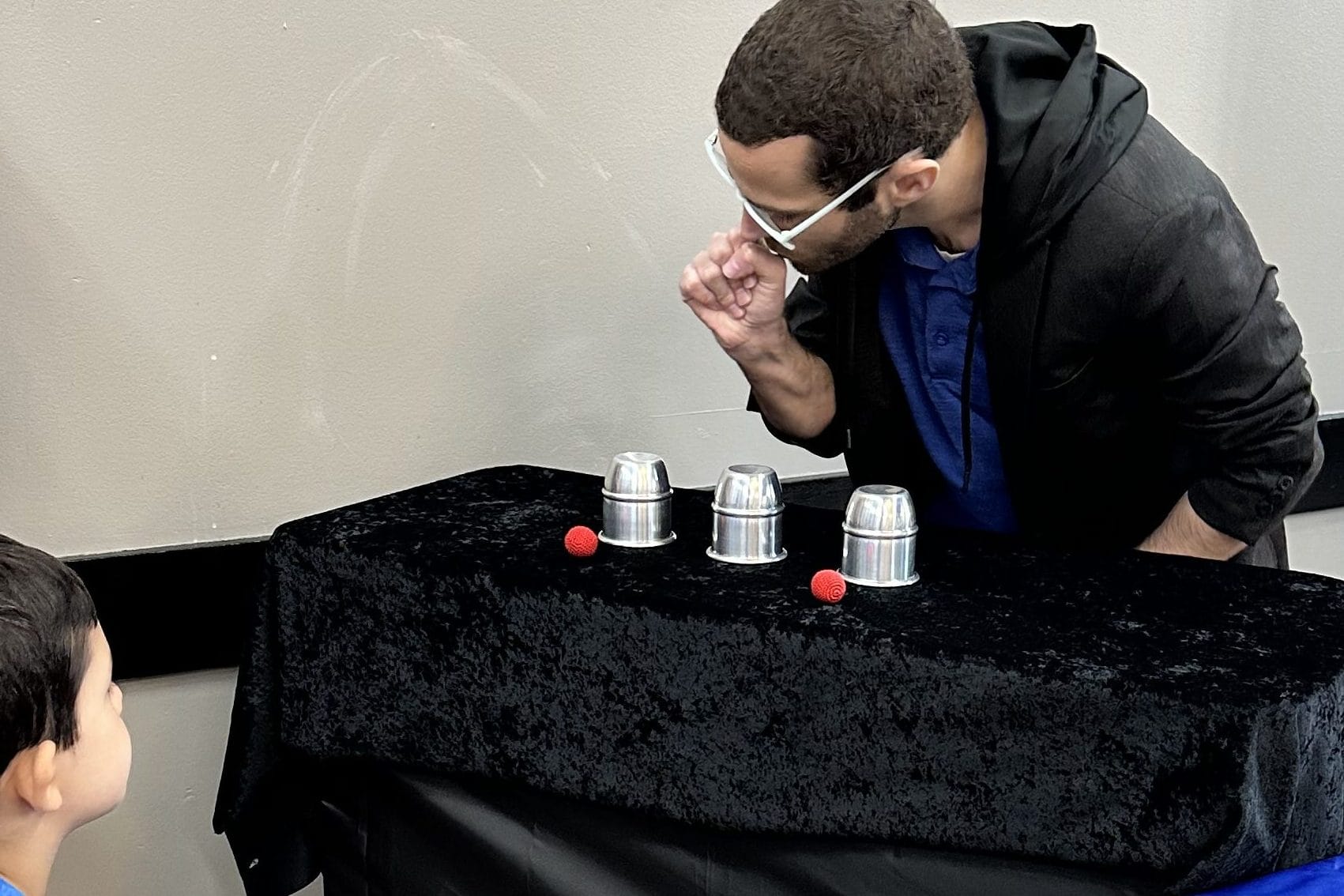
I get it. I’m a poet. I perform magic. Hell, I started my college career in the theatre department. On top of that, I spent last year surviving cancer and reevaluating what matters. The idea that machines might replicate things I’ve spent decades mastering? That’s threatening. Not just economically—existentially.
But here’s the problem: comfortable beliefs don’t protect us. They just make us unprepared.
When you confidently predict AI’s permanent limitations based on what feels right rather than what the evidence suggests, you’re setting yourself up for a nasty surprise. More than that—you’re encouraging others to do the same. That’s not just wrong. It’s dangerous.
Can AI Create Real Art? The Research Says Yes
Take the art question. Research from January 2025 published in Frontiers in Psychology found that humans identify AI-generated versus human-created artwork at barely better than chance—50-60% accuracy. We literally cannot tell the difference.
But here’s where it gets interesting: when researchers showed people identical AI-generated images with different labels, people rated the same images significantly lower on beauty, profundity, and worth when labeled “AI-created.” The art didn’t change. Only the label did.
Our objection isn’t to the quality of AI-generated work. It’s to the idea that a machine made it.
And that’s before we even address the definitional problem. Philosophers have been trying to define art for millennia and have precisely zero consensus. Plato said art was imitation. Tolstoy said it was communication of feeling. The institutional theory says art is whatever the art world’s gatekeepers recognize as art—and by that measure, AI art has already won. Christie’s held its first all-AI auction in February 2025, grossing nearly $730,000.
The Stanford Encyclopedia of Philosophy straight-up admits: “there is no philosophical consensus about the definition of art.” If the people who spend their entire careers thinking about this question can’t agree, maybe we should be skeptical when anyone confidently declares what is and isn’t art.
When someone says “Artificial Intelligence can’t make real art,” what they’re really saying is: “I don’t want AI-generated work to count as art.” That’s not an observation about capability. It’s a value judgment masquerading as fact.
The Economic Fantasy: AI and Job Displacement
Then there’s the labor market denial. This one’s more dangerous because the evidence is already mounting and people are still refusing to see it.
Current AI Job Loss Statistics
The specifics can be hard to pin down because most companies have learned not to announce this kind of thing, if they can avoid it. What company in this day and age is going to openly announce, “Yeah we fired a bunch of people and replaced them with robots” or “We’ve stopped hiring entry-level/any-level humans”. In my own experience, I can tell you that many business owners around here have this idea in their head that, “No one wants to work”—why would someone who genuinely believes that even try to hire when they can automate?
Jobs are being lost to AI—not “jobs that might be at risk someday”—jobs that are already gone. The St. Louis Federal Reserve found in August 2025 that unemployment in AI-exposed occupations rose significantly between 2022 and 2025.
Goldman Sachs estimates that 6-7% of the U.S. workforce could be displaced if AI is widely adopted. The Penn Wharton Budget Model calculated in September 2025 that 40% of current GDP is “substantially affected” by generative AI.
Again, that’s 40% of what our economy produces—not fringe cases. We’re talking core economic activity.
Why “Just Retrain Everyone” Won’t Work
And yet I still hear business owners confidently assert that artificial intelligence will just create new jobs to replace the old ones. “Technology always has,” they say, as if historical patterns are laws of physics. But here again, I get it—my dad is a history teacher. History has always been one of my interests. I used to say things just like this.
Here’s what I realized I was missing: the speed and scale are different this time. The Industrial Revolution took over a century to fully reshape labor markets. The computer revolution took thirty years. AI is happening in five to ten years. And we’re not talking about automating physical tasks that humans didn’t want to do anyway. We’re talking about automating knowledge work—the exact jobs that were supposed to be safe.
The “just retrain everyone” solution sounds nice. It’s also mathematically insufficient. If 40% of GDP-related tasks are automatable, and 77% of dedicated artificial intelligence job roles require master’s degrees—according to National University research examining 15,000 Indeed postings—then who is supposed to retrain for what? And how fast? By the time someone completes a 2-4 year retraining program, AI will have advanced further.
The Penn Wharton model projects AI’s peak impact between 2030 and 2032. That’s five to seven years from now. Not some distant future we can ignore while we figure it out.
When you tell workers “don’t worry, just learn to code” or “AI will create new jobs we can’t even imagine yet,” you’re not offering solutions. You’re offering comfort. And comfort isn’t the same as safety.
The Consciousness Question: What We Don’t Know About AI
The consciousness debate is where things get truly uncomfortable because here, at least, we can be honest: we don’t know.
Leading Researchers Weigh In on AI Consciousness
Leading consciousness researchers published findings in October 2023 calling the question of consciousness in artificial intelligence “urgent” given how fast the technology is advancing. David Chalmers, arguably the world’s most influential philosopher of consciousness, put the probability of AI consciousness within a decade at “above one in five”—roughly 25%—back in 2023.
That’s not fringe speculation. That’s a serious philosopher saying there’s a one-in-four chance that we create conscious machines in the next few years. And remember—that estimate is from two years ago, before the latest wave of capabilities.
A comprehensive research paper from August 2023 synthesized evidence suggesting that contemporary large language models may already meet several established neuroscientific criteria for consciousness, including integrated information theory, global workspace theory, and predictive coding frameworks.
What Science Tells Us (And Doesn’t)
Does that mean ChatGPT is conscious? No. Does it mean we should be absolutely certain it isn’t? Also no.
Yet I routinely hear people dismiss the entire question with “machines can’t be conscious because they don’t have feelings” or “consciousness requires a biological brain.” These aren’t arguments. They’re assumptions dressed up as facts.
We don’t even have a universally accepted definition of consciousness. We don’t fully understand how it emerges in human brains. The hard problem of consciousness—explaining why there’s something it’s like to be you, i.e. experiencing the redness of red or the painfulness of pain—remains completely unsolved.
So, when someone confidently declares that artificial intelligence can never be conscious, what they’re really declaring is that they haven’t spent much time studying the problem.
What’s Really Happening: Managing Our Anxiety
I think most of these confident predictions come from the same psychological place: we’re trying to manage our anxiety.
A brain surgeon posts on social media that “AI will never be as intelligent as a human,” and people believe them because they’re an expert. But expertise in neurosurgery doesn’t translate to expertise in machine learning any more than being a great chef makes you an expert in agricultural economics.
We’re all doing it. We find someone—anyone—with credentials who will tell us what we want to hear, and we cling to their authority so we don’t have to sit with the uncertainty.
My Own Biases as an AI Consultant
I’m doing it too. I’m building an AI-focused consulting practice in part because I’m a cancer survivor who spent 2022 looking at AI capabilities and thinking “I need to make this my bet or find something else to do.” I have financial incentives to believe artificial intelligence is transformative. I have psychological incentives to believe I can stay ahead of it.
When I say people are probably wrong about AI’s limitations, I’m including myself in that statement. I could be wrong about what’s possible. I could be underestimating it. I could be overestimating it. The honest answer is, “I don’t know. None of us do.”
But here’s the difference: I’m not pretending I know. I’m not making sweeping pronouncements about what artificial intelligence will never be able to do based on what makes me comfortable.
The Stakes: Why This Matters Now
This isn’t abstract philosophy. Real decisions are being made based on these comfortable beliefs.
Businesses, Workers, and Policymakers
Businesses are choosing not to prepare for AI disruption because they believe it won’t affect them. Workers are not retraining because they believe their jobs are safe. Creative professionals are dismissing tools that could extend their capabilities because they believe those tools can’t do “real” work.
And policymakers? They’re not developing the safety nets that will be necessary if widespread displacement happens because too many people are still insisting it won’t.
The Safety Net Problem
Consider what we’re not talking about because we’re too busy denying the problem: If artificial intelligence does displace significant labor at the scale some economists are projecting, our current systems are structurally unprepared.
Unemployment insurance in the U.S. replaces less than approximately 37% of average weekly income for only 26 weeks (standard), according to the Center for American Progress. As of August 2025, more than 25% of the four million unemployed had been jobless for 27 weeks or longer.
The system is designed for temporary displacement, not structural unemployment.
Wealth Concentration and Economic Inequality
And the wealth concentration that comes with this? As artificial intelligence replaces labor, economic returns shift from workers to capital owners—the people who own the AI systems and the infrastructure that runs them. The IMF warned in April 2025 that adoption of this tech could worsen within-country inequality. Research published in September 2024 found that increased AI capital stock is directly associated with increased wealth inequality.
This isn’t speculation. It’s economic mechanism. When capital replaces labor as the primary factor of production, returns shift to capital owners. That’s how capitalism works.
But we can’t have an honest conversation about solutions—whether that’s universal basic income, expanded safety nets, or some combination of tactics we haven’t even imagined yet—if half the room is still insisting the problem won’t happen because artificial intelligence has “limits” that make them feel better.
The Uncomfortable Truth About AI’s Future
The most likely scenario isn’t that machines definitely will or definitely won’t achieve human-level capabilities across all domains. It’s that the question is far more complex, uncertain, and domain-specific than any confident prediction allows.
Artificial intelligence might revolutionize some industries while barely touching others. It might create consciousness in ways we don’t recognize as consciousness. It might displace 40% of workers or 4%—and we won’t know which until we’re already living it.
Certainty vs. Preparation
What I’m certain of is this: the people making the most confident predictions about AI’s permanent limitations are usually the people who have the most to lose if they’re wrong. And that’s exactly when we should be most skeptical of our own certainty.
I’m not asking you to believe machines will definitely displace your job, or achieve consciousness, or create gallery-worthy art. I’m asking you to admit you don’t know for certain that it won’t.
That admission—that honest acknowledgment of uncertainty—is the starting point for actually preparing. For asking what we’ll do if these capabilities emerge. For developing contingency plans instead of comfortable denial.
History’s Lesson on Technological Limits
Because here’s what history teaches us: every time humans have confidently predicted technology’s limits based on what seems possible rather than what the evidence suggests, we’ve been wrong. The people who insisted heavier-than-air flight was impossible. The people who said home computers had no practical use. The people who claimed the internet was a fad.
They all felt certain too.
What To Do Instead: Uncomfortable Preparation
So what’s the alternative to comfortable certainty?
Uncomfortable preparation.
For Businesses: AI Scenario Planning
Scenario planning that includes significant disruption from automation, even if you think it won’t happen. What’s your 2030 strategy if 40% of your current processes are automatable?
For Workers: Skills Development Strategy
Skills development that emphasizes what artificial intelligence currently struggles with:
- Complex interpersonal dynamics
- Embodied physical work in unpredictable environments
- Creative problem-solving that requires real-world context
- Learning to work WITH artificial intelligence tools rather than pretending they don’t exist
For Policymakers: Honest Economic Conversations
Honest conversations about safety nets, economic restructuring, and other mitigating strategies that don’t start with “but this definitely won’t happen” and don’t end with “just retrain everyone.”
For All of Us: Intellectual Humility
Intellectual humility. A willingness to say “I don’t know” when we don’t. A commitment to updating our beliefs when new evidence emerges instead of clinging to comfortable certainties.
That’s harder than confidence. It requires sitting with uncertainty. It requires admitting we might be building careers on skills that become obsolete or holding beliefs about human uniqueness that turn out to be parochial.
But hard truths beat comfortable lies. Every time.
The Bottom Line on AI Limitations
AI can’t create real art. AI will never replace human workers. AI can’t think. AI will never be conscious.
Maybe you’re right. Maybe these statements are true and I’m worrying about nothing.
But if you’re wrong—if AI can do even some of what you’re certain it can’t—then your comfortable certainty has left you unprepared. And in a transformation happening this fast, being unprepared is the most dangerous position of all.
I’d rather be uncomfortable and prepared than comfortable and caught off guard.
I’d rather ask hard questions than accept easy answers.
And I’d rather admit what I don’t know than pretend to certainty I don’t have.
That’s not pessimism. That’s not even prediction.
It’s just honesty.
And right now, in this moment of rapid transformation, honesty might be the most valuable thing we can offer each other.
Created by Gabriel Cassady, an AI consultant and co-owner of 2oddballs Creative in Springfield, Missouri.
I write and speak about the intersection of artificial intelligence, human creativity, economic change, and more. To contact me, visit my Contact Page HERE.