
What Kind of AI Expert Am I, Exactly?
AUTHOR PROVENANCE STATEMENT: The following text describing my journey to AI expertise was touch-typed in Apple Notes on my computer, starting on the morning of
AUTHOR PROVENANCE STATEMENT: The following text describing my journey to AI expertise was touch-typed in Apple Notes on my computer, starting on the morning of

“AI art” has become a catch-all phrase for very different things. Here’s a practical working definition centered on human intent, skill, and imagination—and why that distinction matters to artists.
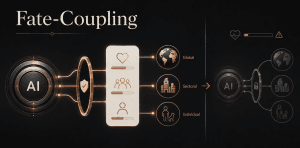
Created by me (i.e. Gabriel Cassady), fate-coupling is a proposed AI safety and governance concept where an AI agent’s ability to keep operating would be tied to measurable human well-being. If the relevant human welfare indicators decline past some threshold, the AI does not just get a strongly worded memo. Its privileges shrink. Its access is reduced. In some cases, it may be shut down altogether.
AI answers are shaped by the web they retrieve from. Here’s how businesses can improve AI search visibility ethically without spammy manipulation tactics.
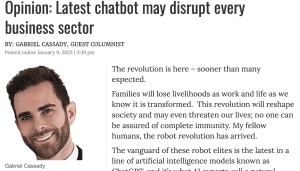
This article was originally published, verbatim, on the Springfield Business Journal (SBJ) website on Jan 9, 2023. For reference, the first publicly available version of ChatGPT was released in November of 2022.

The company that makes Claude just asked the world for an AI emergency break. You don’t install an emergency brake on a butter knife; AI is not “just another tool”. Here are 7 fact-checked reasons why.
AI data centers are neither a harmless nonissue nor an ecological apocalypse by definition. Here’s a fair-minded look at the real climate, water, and community concerns—and what Southwest Missouri residents should demand from developers.
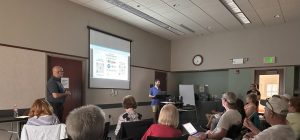
Out-of-state site selectors keep getting blindsided in Missouri. A Springfield-based AI consultant on what data center developers should actually know about power, water, zoning, and community trust in 2026.
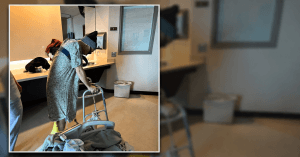
A new study in the journal “Science” suggests AI may be unusually good at one of medicine’s hardest jobs: making sense of sparse, messy information fast. After my own ER nightmare, that lands as more than a headline.