Here’s a scenario I hear about every few months.
A business owner — someone smart, someone who has built something real — hires an AI consultant after a promising sales call. Spends five, ten, sometimes twenty thousand dollars. Gets a slide deck. Maybe a workflow diagram. A few recommendations that sound impressive in a room but don’t survive contact with actual operations. Three months later, nothing has changed except the checking account balance.
The consultant was technically competent. Maybe even brilliant, by some measures. But they weren’t the right fit, and the business owner didn’t know what questions to ask to find that out before signing anything.
I’m an AI consultant. I’m going to tell you how to evaluate people like me.
That probably seems counterintuitive. It isn’t. If you walk into an engagement with an AI consultant who can’t answer these seven questions honestly and specifically, you should walk back out. That’s not good for them. But it’s very good for you.
1. Have you ever actually built anything?
This one matters more than people think.
And most consultants dodge it beautifully.
There’s a difference between an AI consultant who has used AI tools and one who has built something with them. Designed a workflow. Prototyped a product. Deployed a system inside a real business with real constraints, real data, and real humans who pushed back. The former group reads newsletters. The latter group has scar tissue.
Ask them to be specific. Not “I’ve helped clients implement AI strategies.” Ask: What did you build? What broke? What did you learn?
If the answer is vague, that’s your answer.
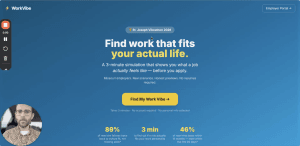
For reference: I’ve built an AI-powered workforce matching platform (i.e. WorkVibe) in 24 hours as part of a competitive hackathon. I placed 3rd out of 20+ teams, and I use AI tools daily inside a real, local business that’s been around since 2017. I’m not saying that to impress you. I’m saying it so you know the bar I’d hold anyone else to.
2. What won’t AI solve for us?
This question separates the honest ones from the salespeople fast.
Anyone trying to close a deal will tell you what AI can do. The list is long. It’s also mostly true. But a consultant who only talks about possibilities and never about limits is either naive, dishonest, or both — and neither option is good for your business.
The right consultant will tell you, without prompting, that AI won’t fix a broken process — it’ll speed it up and make the breakage worse; That AI won’t replace the judgment calls that only come from experience; That the implementation risk in your specific industry, with your specific team, in your specific regulatory environment, might outweigh the early gains; That some of the most-hyped use cases in AI are genuinely overhyped and not worth chasing right now.
You want someone who will occasionally tell you not to do something. If they never do, they’re not advising you: they’re selling to you.
3. How do you price your work, and why?
Ask this directly. Watch what happens.
Some consultants will hedge. Some will deflect to “it depends on scope.” Some will suddenly need three discovery calls before they’ll give you a number. Those are all reasonable, sometimes (complexity is real). But if a consultant can’t give you a clear sense of how they price within the first or second conversation, something is off.
More importantly: ask why. Why hourly vs. retainer vs. project-based? What does the pricing structure say about what the engagement is supposed to accomplish? The structure of an engagement reveals a lot about what the consultant actually thinks success looks like. Hourly billing, for example, has no inherent incentive to get you to the results you need in a timely manner. Retainers work great if there’s ongoing depth of work — and work terribly if there isn’t.
I’m transparent about my pricing. I don’t do this because I’m naive about business. I do it because clients who know what they’re paying (and why) make better partners. You can review my services and rates here before you ever talk to me.
4. What does success look like in 90 days (not three years)?
This one makes some consultants uncomfortable. That discomfort is data.
Big AI transformations are real. They also take years. But the question of what you’re going to accomplish in the next 90 days is what separates a consultant who will be useful to you from one who will be useful to themselves.
Press for specifics. Not “we’ll assess your current workflows and develop a strategic AI roadmap.” That’s the shape of deliverables, not the substance. Ask: by day 90, what will be different in my business? What will you have done? What will I have in hand? What will be measurably better?
If the answer is a shrug and a reference to long-term ROI, ask what they’re going to do in week one. Sometimes you learn a lot from that question alone.
5. Who have you failed? What did you learn from it?
I’m not asking this to be dramatic. I’m asking because the honest answer to this question tells you more than any portfolio or testimonial page.
Every experienced consultant has failed something. Recommended something that didn’t work. Missed a contextual factor that mattered. Moved too fast. Moved too slow. If someone claims they haven’t — or gives you a non-answer dressed up as humility — one of two things is true: either they haven’t been doing this long enough to have failed yet, or they’re not honest about failure. In either case, you don’t want them managing your AI strategy.
I’ve gotten things wrong. I’ve told clients to move in a direction that turned out to be premature. I’ve underestimated integration complexity. I’ve learned from all of it. I’ll tell you about it if you ask.
6. What’s your position on [something specific you’ve heard about]?
This is the test. And you should actually use something real — something you’ve read or heard about recently that you’re genuinely curious about.
Pick an AI tool you’ve seen advertised, an approach you read about, a claim someone made at a conference. Ask your prospective consultant what they think about it. Not “are you familiar with it?” You’re asking for their actual opinion.
A consultant who knows their field deeply will have specific, considered, sometimes contrarian views. They’ll agree with some of it and push back on other parts. They’ll be curious about your question, not defensive. They might say “I’m skeptical of that specific use case for a business your size, and here’s why.”
The wrong answer is any version of “yes, that’s definitely something we could explore.” That’s not expertise. That’s agreement for the sake of agreement, which is exactly what you’re trying to screen for.
7. Can I talk to someone you’ve worked with?
This last one is simple. Ask it anyway.
Not a written testimonial. Not a case study they control the narrative on. A real conversation with a past or current client — one where you can ask what it was actually like to work with this person. What went well. What was frustrating. Whether they’d hire them again, and under what circumstances.
A consultant who hesitates here is a consultant who isn’t confident you’ll like what you hear. That’s worth knowing.
One more thing before you go.
I wrote this knowing full well that some people will read it, evaluate me against these seven questions, and decide I’m not the right fit for them. That’s fine. That’s actually the point.
Good AI consulting relationships don’t start with a hard close. They start with honesty: about what you need, what I do, and whether those things match. Sometimes they don’t. I’d rather find that out in a 25-minute conversation than after you’ve written a check.
If you want to ask me these seven questions directly, start here. I’ll give you straight answers to all of them.