MIND (Moebio)
A web app that explores how a single prompt branches into many ChatGPT completions, visualized as trajectories through embedding space reduced to 3D with PCA.
A web app that explores how a single prompt branches into many ChatGPT completions, visualized as trajectories through embedding space reduced to 3D with PCA.
An MIT-licensed GitHub repo containing a SKILL.md + reference files that instruct Claude (or other LLMs) to remove common “AI voice” phrases, structures, and rhythms from prose.
A hand-curated public catalogue of datasets/archives that predate, or aim to exclude, post‑2022 machine-generated content. ([lowbackgroundsteel.ai](https://lowbackgroundsteel.ai/))


Free, live AI engineering classes held Wednesdays at 5 PM CT, with an on-demand portal of past sessions (portal access details and pricing not confirmed).
A UC Berkeley RDI “living” benchmark and dataset for evaluating computer-use AI agents on long-horizon, economically valuable professional workflows with verifiable outcomes.
An experimental Google Labs product for conversational “AI coaches” based on real experts (starting with Kim Scott) that uses Gemini to answer in the expert’s voice and domain.

Google Code Wiki is a public-preview web tool that generates a continuously updated wiki (plus Gemini-powered Q&A and diagrams) for code repositories.
LinkedIn Labs Crosscheck lets members run the same prompt against two AI models, vote on the better answer, and contribute to a segmented model leaderboard.
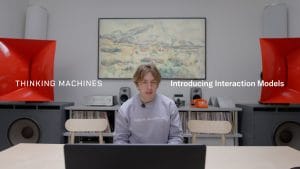
Thinking Machines Lab’s May 11, 2026 post introducing “interaction models,” a real-time, multimodal approach designed to make interaction a native property of the model rather than external scaffolding.
An open contribution drive to publish permissioned coding-agent session traces (target: 20T tokens) via local redaction and public dataset uploads to Hugging Face.